


Flow Meter
Product Overview
A flow meter measures the volumetric or mass flow rate of a process medium moving through a pipeline. The appropriate meter technology and configuration depend on the measured medium, required flow range, pipe size, operating pressure and temperature, accuracy requirements, installation conditions, and control-system interface.
Industrial flow meters are available in different measurement technologies, including electromagnetic, vortex, Coriolis, ultrasonic, differential pressure, and turbine types. Each technology uses a different measurement principle and has specific process requirements. For engineering and procurement projects, flow meter selection should therefore begin with actual process conditions rather than the meter model or nominal pipe size alone.
Flow meters can be configured as individual measuring instruments or integrated into process instrumentation, PLC, DCS, and other automation systems, subject to the selected meter configuration.


Working Principle & Configuration
Electromagnetic Flow Meter
An electromagnetic flow meter uses Faraday's law of electromagnetic induction to measure the velocity of a conductive liquid passing through a magnetic field. The induced voltage is related to the velocity of the fluid. They are commonly considered for conductive liquids and slurry applications where no moving internal measuring components and low permanent pressure loss are required.
Key selection factors: Minimum fluid conductivity, liner material, electrode material, flow velocity, process temperature/pressure, pipe size, and process connection.
Vortex Flow Meter
A vortex flow meter measures flow based on the von Karman vortex shedding principle. As the process medium passes a bluff body, alternating vortices are generated downstream. The shedding frequency is used to determine flow rate for liquids, gases, and steam within applicable process ranges.
Key selection factors: Flow velocity, Reynolds number, fluid phase, process pressure/temperature, pipe size, pipeline vibration, and required straight-run conditions.
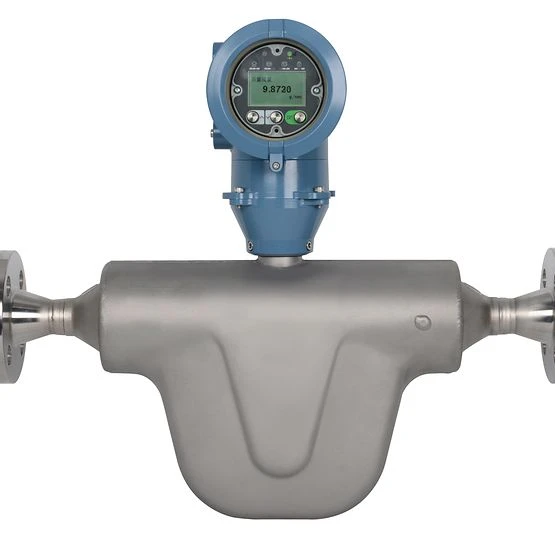
Coriolis Flow Meter
A Coriolis flow meter measures mass flow using the Coriolis effect generated in vibrating measuring tubes. Depending on the meter configuration, direct mass-flow measurement together with density and temperature variables is available.
Key selection factors: Required mass-flow range, fluid density/viscosity, process pressure/temperature, pressure-loss requirements, pipe size, process connection, and required output/communication functions.
Ultrasonic Flow Meter
Ultrasonic flow meters determine flow velocity using methods such as transit-time or Doppler measurement. Inline and clamp-on configurations are available in applicable designs, making ultrasonic technology suitable for non-intrusive installations where pipe modification or process interruption needs to be minimized.
Key selection factors: Fluid characteristics, gas or solids content, pipe material/construction, pipe diameter, installation location, available straight run, and signal transmission conditions.
Differential Pressure Flow Meter
A differential pressure flow meter determines flow rate from the pressure difference generated across a primary flow element (such as an orifice plate or Venturi tube) together with a differential pressure transmitter.
Key selection factors: Primary element type, differential pressure range, process pressure/temperature, permanent pressure loss, impulse piping arrangement, fluid phase/properties, and required accuracy.
Turbine Flow Meter
A turbine flow meter uses a rotor driven by the process medium. Rotor speed is related to flow velocity and is converted into a flow-rate signal by the meter electronics. They are generally selected where the medium and process conditions are suitable for a clean, stable-flow mechanical element.
Key selection factors: Fluid cleanliness, viscosity, flow range, operating pressure/temperature, rotor/bearing configuration, and required output signal.
Main Instrument Configuration
Depending on the selected technology, a flow meter may include:
Primary measuring element or flow sensor
Measuring tube, electrodes, rotor, bluff body, or other technology-specific components
Integrated or remote transmitter
Wetted process components and process connections
Electronics enclosure and local display (where specified)
Signal output, communication interface, and power supply components
Mounting and installation accessories, where applicable
Key Features & Engineering Configuration
Multiple Measurement Technologies: Different physical principles can be selected according to the measured medium, flow range, installation conditions, and required measurement method.
Process-Based Configuration: Meter configuration can be tailored to pipe size, process pressure, temperature, fluid properties, wetted-material requirements, process connection, and electrical interface.
Flexible Signal Interfaces: Available interfaces include 4-20 mA, pulse output, frequency output, HART, Modbus, and other specified communication protocols.
Wetted Material Options: Wetted components can be configured according to actual fluid composition, pressure, temperature, and required service conditions.
PLC and DCS Integration: Flow meters can be integrated with process control and automation systems according to the required output signal, communication protocol, power supply, and control architecture.
Retrofit and Replacement Applications: For replacement projects, the existing meter should be checked for face-to-face dimensions, nominal pipe size, flange/connection standard, pressure rating, power supply, output signal, communication protocol, wetted materials, and installation orientation.
Measurement Technology Selection Matrix
|
Measurement Technology |
Typical Media |
Measurement Principle |
Typical Characteristics |
Key Selection Factors |
|
Electromagnetic |
Conductive liquids, slurries |
Magnetic induction |
No moving measuring parts; low permanent pressure loss |
Conductivity, liner, electrode material, flow velocity |
|
Vortex |
Liquids, gases, steam |
Vortex shedding |
Suitable for selected liquid, gas, and steam applications |
Flow velocity, Reynolds number, vibration, straight run |
|
Coriolis |
Liquids, gases |
Coriolis effect |
Direct mass-flow measurement |
Density, viscosity, pressure loss, flow range |
|
Ultrasonic |
Liquids, gases |
Transit time / Doppler |
Inline and applicable clamp-on configurations |
Fluid condition, pipe construction, installation |
|
Differential Pressure |
Liquids, gases, steam |
Differential pressure |
Established primary-element measurement method |
Primary element, pressure loss, DP range, impulse piping |
|
Turbine |
Suitable clean liquids or gases |
Rotor rotation |
Fast response under suitable operating conditions |
Fluid cleanliness, viscosity, flow range, rotor design |
The final specification should be determined from the actual process conditions and the selected measurement technology.
Information Required for Flow Meter Selection
Measurement Technology: Electromagnetic, vortex, Coriolis, ultrasonic, DP, turbine, or other specified type
Measured Medium: Liquid, gas, steam, slurry, or other medium
Flow Rate: Minimum, normal, and maximum operating/design flow
Nominal Pipe Size: Existing or required pipe diameter
Operating Pressure & Temperature: Normal and maximum limits
Fluid Properties: Conductivity, viscosity, density, solids content, or other relevant data
Process Connection & Wetted Materials: Flange, thread, clamp, and material compatibility requirements
Electrical & Output: Power supply, 4-20 mA, pulse, frequency, HART, Modbus, or other required protocols
Protection & Display: Enclosure protection rating, local display requirement, and installation arrangement (inline, remote mount, clamp-on)
Certifications: Applicable project, hazardous-area, or industry requirements
Industry Applications
Water & Wastewater: Flow measurement for raw water, treated water, distribution systems, wastewater, effluent, and process utility lines using electromagnetic and ultrasonic technologies.
Chemical Processing: Flow measurement for process liquids, chemical feed systems, and utility services, requiring strict material compatibility, pressure, and temperature reviews.
Petrochemical & Oil & Gas: Process and utility services including selected hydrocarbons, steam, cooling, and flare applications, requiring strict confirmation of hazardous-area ratings and certifications.
Power Generation: Boiler-related services, condensate, cooling water, and auxiliary utilities subject to specific pressure and temperature limits.
Food & Beverage: Process and utility fluids requiring hygienic design, cleanability, specific process connections, and wetted materials.
Pharmaceutical: Process and utility services, including purified water, requiring high-purity construction, material compliance, and documentation.
Manufacturing, Quality Control & Inspection
Flow meter quality control focuses on configuration accuracy, dimensional conformity, functional verification, and documentation:
Technical Configuration Review
Cross-checking customer process data and purchase specifications against the selected meter configuration before production to eliminate mismatch risks.
Dimensional & Visual Inspection
Inspecting meter dimensions, face-to-face lengths, process connections, flange condition, housing/enclosure condition, nameplate details, and visual workmanship.
Functional & Calibration Verification
Factory testing including functional verification, zero verification, or flow calibration using applicable test equipment with traceable reference reports.
Project Documentation
Supplying user manuals, dimensional drawings, wiring diagrams, factory test reports, calibration certificates, material documentation, and data sheets as agreed during technical clarification.
OEM, Customization & Replacement Support
Flow meter configurations can be reviewed according to project-specific process and installation requirements. Potential customization areas include:
Measurement technology, meter size, process connection, and wetted materials
Liner or sensor configuration, and integrated/remote transmitter arrangements
Output/communication interfaces, display configurations, and replacement face-to-face dimensions
FAQ
With abundant experience, we are one of the most professional flow meter suppliers in China. Please feel free to buy high quality flow meter in stock here and get quotation from our factory. Good service and low price are available.