


Pressure Transmitter
Product Overview
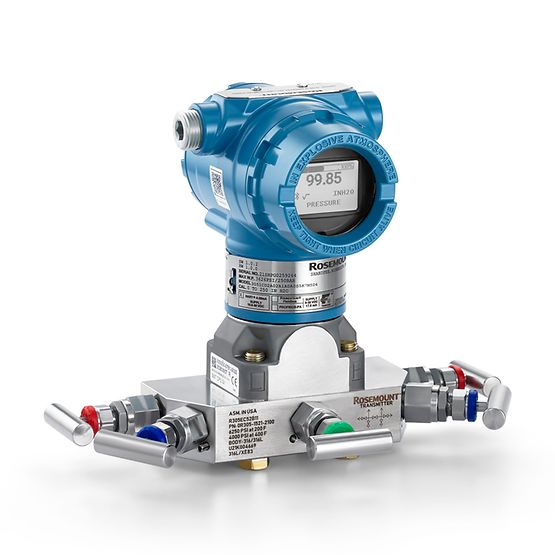
The Industrial Pressure Transmitter is designed for continuous measurement of process pressure in liquids, gases, and steam. It converts measured pressure into a standardized 4-20 mA output signal, with HART communication available for configuration and digital communication.
The transmitter is intended for industrial process measurement and control applications where pressure information needs to be transferred to control, monitoring, or automation systems. Depending on the selected configuration, pressure measurement, process connection, wetted materials, output, communication, and hazardous-area requirements can be specified to match the application.
Typical applications include pressure monitoring in oil and gas, petrochemical processing, power generation, water and wastewater treatment, chemical processing, and other continuous industrial processes.


The pressure transmitter uses an isolated sensing assembly to convert process pressure into an electrical signal.
Pressure Sensing: Process pressure acts on the isolation diaphragm and is transferred to the internal sensing element through the fill system.
Signal Conversion: The sensing element responds to the applied pressure and generates an electrical signal corresponding to the measured pressure.
Signal Processing
Internal electronics process and linearize the sensor signal before providing the configured output.
Temperature Compensation
Where supported by the selected configuration, electronic compensation can be used to account for changes in operating conditions.
Configuration
Depending on the model, parameters such as measurement range, zero/span, damping, and communication settings can be configured locally or through the applicable HART interface.
Key Features
Multiple Pressure Measurement Types: Available configurations can cover gauge, absolute, and differential pressure measurement according to the selected model.
Standard Industrial Output: 4-20 mA output is available for integration with conventional industrial control and monitoring systems.
Configurable Wetted Materials: Wetted-part options such as 316L stainless steel, Hastelloy C-276, or other specified materials can be selected according to the applicable model and process medium.
HART Communication
HART communication can provide digital access to transmitter configuration and diagnostic information where supported.
Flexible Process Connections
Threaded and flanged process connections can be configured according to the installation requirements.
Industrial Enclosure Options
Housing and protection configurations can be selected according to the installation environment and applicable product specification.
Hazardous-Area Options
Where available for the selected model, hazardous-area configurations can be specified according to the required protection method and certification.
Technical Specifications
|
Technical Parameter |
Specification Details |
|
Measurement Type |
Gauge / Absolute / Differential Pressure, model dependent |
|
Sensor Type |
Silicon sensing technology, model dependent |
|
Reference Accuracy |
Up to +/-0.075% of span, model/configuration dependent |
|
Measuring Range |
Model dependent |
|
Output Signal |
4-20 mA DC |
|
Communication |
HART, where specified |
|
Power Supply |
Model dependent |
|
Wetted Materials |
316L Stainless Steel / Hastelloy C-276 / other available materials, model dependent |
|
Process Connection |
Threaded / Flanged, model dependent |
|
Electrical Connection |
Model dependent |
|
Ambient Temperature |
Model dependent |
|
Process Temperature |
Model dependent |
|
Ingress Protection |
Model dependent |
|
Hazardous-Area Protection |
Available options depend on model and certification |
|
Calibration |
Configuration and calibration according to the selected product specification |
Applications
Oil & Gas: Pressure transmitters can be used for pressure monitoring in pipelines, separators, process vessels, and other oil and gas process equipment, subject to the selected pressure range, materials, and process connection.
Petrochemical & Chemical Processing: Applications include reactor and vessel pressure monitoring, process-line measurement, and pressure control where the transmitter configuration is compatible with the process medium and operating conditions.
Power Generation: Typical applications include boiler systems, steam lines, feedwater systems, and other pressure-monitoring points within power-generation processes.
Water & Wastewater Treatment: Pressure transmitters can be applied to pumping systems, water pipelines, treatment equipment, and process monitoring points where continuous pressure measurement is required.
Metallurgy, Mining & Industrial Equipment: Suitable configurations can be used for pressure measurement in process equipment, hydraulic systems, compressors, and industrial machinery, depending on pressure range and environmental requirements.
Food & Pharmaceutical Processing: For applications requiring controlled process conditions, the transmitter configuration should be selected according to process medium, temperature, pressure, wetted materials, connection requirements, and applicable hygiene or compliance requirements.
Manufacturing & Quality Control
For products manufactured or configured through the company's instrumentation operations, quality control can focus on the aspects that directly affect measurement and installation performance.
Component and Assembly Inspection: Critical transmitter components, sensor assemblies, housings, process connections, and electrical interfaces are checked according to the applicable product configuration.
Configuration Verification: Measurement range, output signal, process connection, wetted materials, and other ordered options are checked against the customer's specification.
Pressure and Signal Testing: Where applicable, pressure response and electrical output are verified against the specified product requirements.
Calibration: Transmitters are calibrated according to the applicable measurement range and product specification.
Final Inspection: Product identification, configuration, connections, appearance, and required documentation are checked before shipment.
Product Selection & Configuration
Selecting a pressure transmitter requires more than choosing a measurement range. The following information should be considered before ordering:
Measurement Type: Specify whether the application requires gauge pressure, absolute pressure, or differential pressure.
Measurement Range: Provide the normal operating pressure and required measurement range. The selected range should be suitable for the actual process conditions.
Process Medium: Identify the measured medium, such as water, steam, gas, oil, chemical liquids, or other process media. Media compatibility should be considered when selecting wetted materials and diaphragm configurations.
Process Connection: Specify the required connection type and size, such as threaded or flanged connections.
Wetted Materials: Material selection should be based on the process medium, temperature, pressure, and corrosion conditions. Available options depend on the selected transmitter model.
Output & Communication: Common configurations include 4-20 mA and 4-20 mA + HART. Other communication or output options should be confirmed according to the selected model.
Operating Conditions: Provide relevant process and environmental conditions, including process temperature, ambient temperature, static pressure where applicable, installation environment, and hazardous-area requirements.
Documentation & Certification: Where required, specify applicable calibration documents, material documentation, hazardous-area certification, or other project documentation during the quotation stage.
FAQ
With abundant experience, we are one of the most professional pressure transmitter suppliers in China. Please feel free to buy high quality pressure transmitter in stock here and get quotation from our factory. Good service and low price are available.